
Rod string designs change. Well conditions shift, new data comes in, someone rethinks taper lengths or rod grades. A single well might see its design adjusted a dozen times in a year.
The problem is not that designs change. The problem is that nobody tracks the changes.
Most teams work from spreadsheets, email threads, or shared drives where the latest file is named something like "Wellbore_7-Final-v3-REVISED-Mike.xlsx." When something goes wrong, there is no reliable way to answer the most basic questions: What changed? Who changed it? When? And why?
Three scenarios that expose the gap
The engineer who leaves
Your senior rod pump engineer takes another job. They managed designs for 200 wells across three fields - their own spreadsheets, their own naming conventions, their own logic for why certain wells got certain configurations. The replacement inherits a folder of files with no context. They cannot tell which design is current, which was experimental, or which was rolled back after a failure.
The design regression
A well starts experiencing higher rod part frequency after a design change. Someone remembers the previous design was running well, but nobody can say exactly what it looked like. The parameters were overwritten. Now you are guessing at what worked before instead of simply restoring it.
The audit
Someone asks: show us the engineering basis for this well's rod string design. Show us who approved it and the progression of changes. If the answer is a chain of emails and a folder of undated spreadsheets, that is not a good look - even if the underlying work was sound.
Why spreadsheets fail at this
Spreadsheets are excellent calculation tools. They are terrible version control systems. Save over a file and the previous version is gone. Create copies to preserve history and you create confusion about which is authoritative. Email compounds this - design decisions get buried in threads, attachments proliferate, and within a week nobody can identify the canonical version.
None of these tools were designed for this job. They can hold data, but they cannot manage the lifecycle of a design.
How PetroBench handles version control
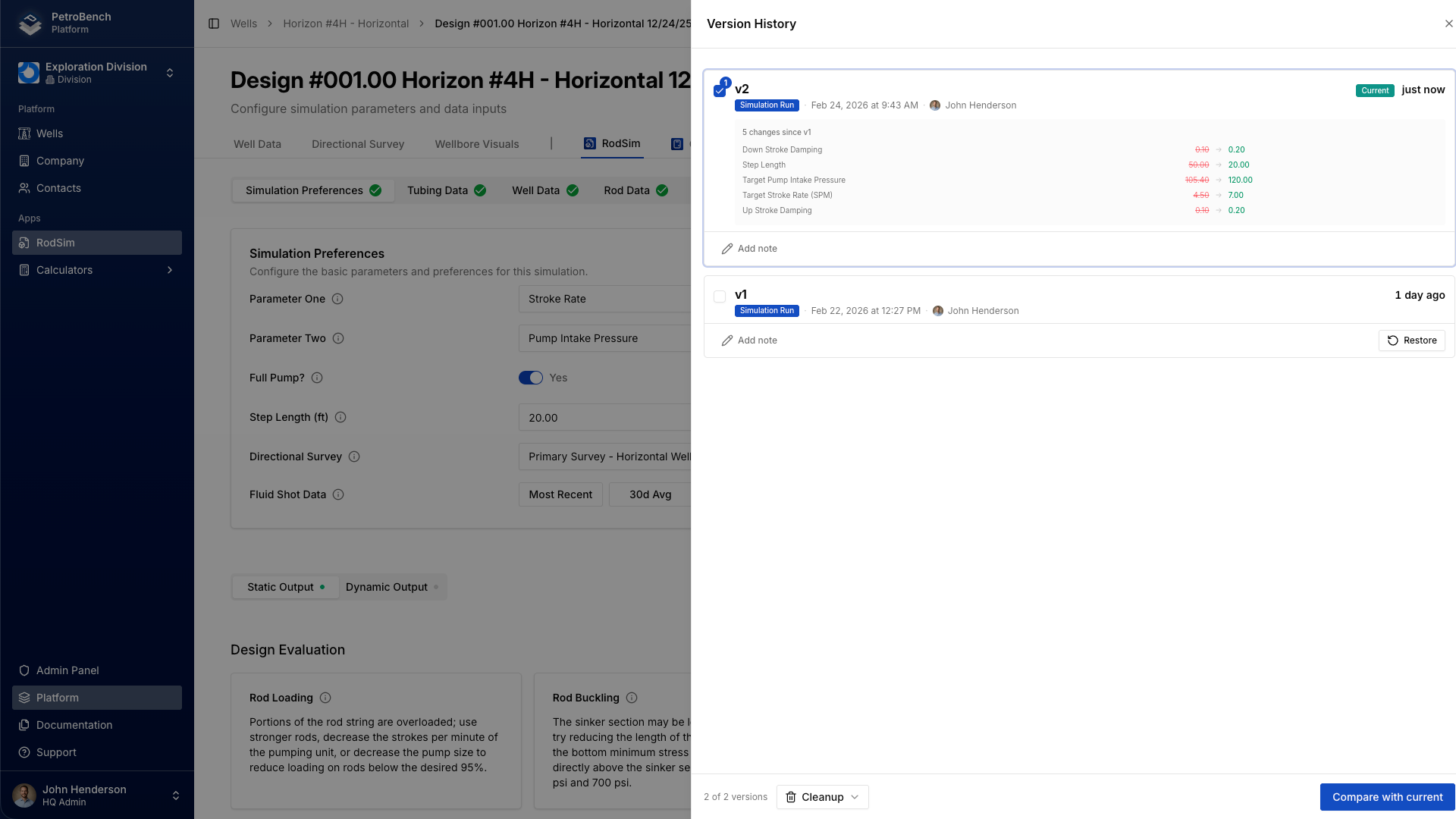
Version control is built into how designs work. Every time a rod string design is saved, the system automatically creates a new version - a complete snapshot, not a diff. Each version records:
- Who made the change
- When it happened
- What changed across all parameters
- Why - through optional version notes
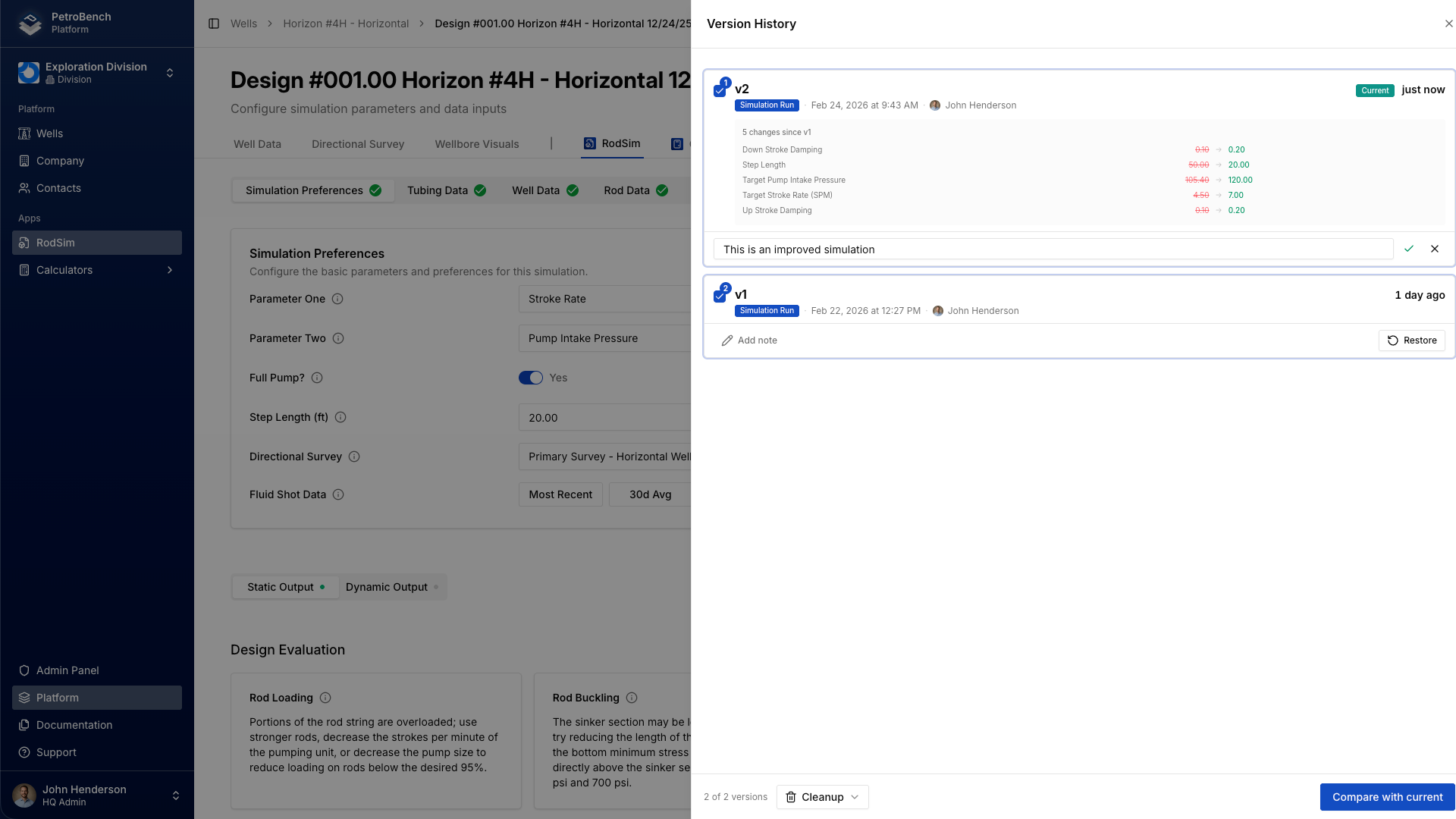
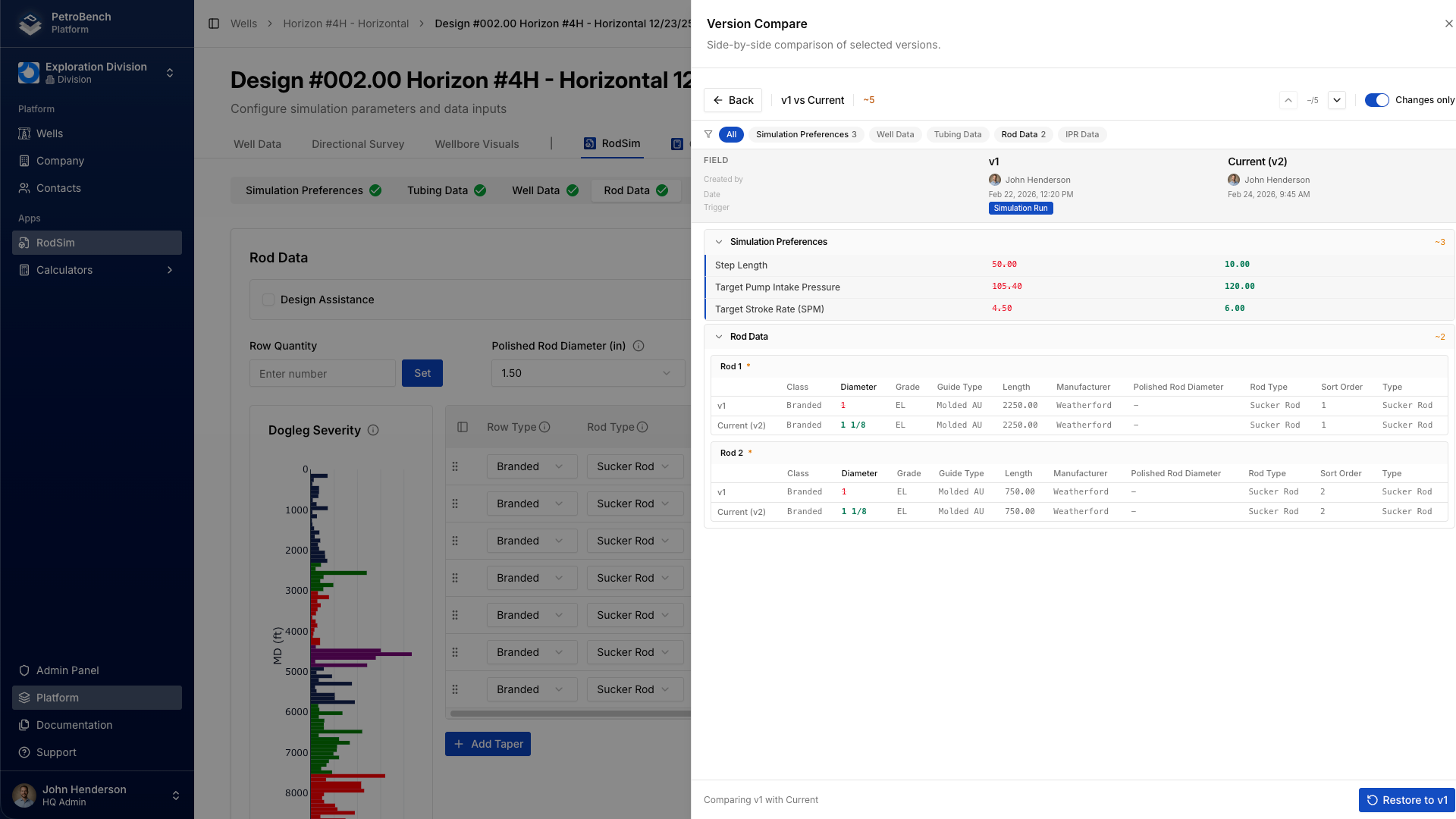
The compare function lets you select any two versions and see a field-by-field breakdown: this rod grade changed from D to KD, this taper length went from 3,200 to 2,800 feet. It takes seconds to understand what happened between any two points in a design's history.
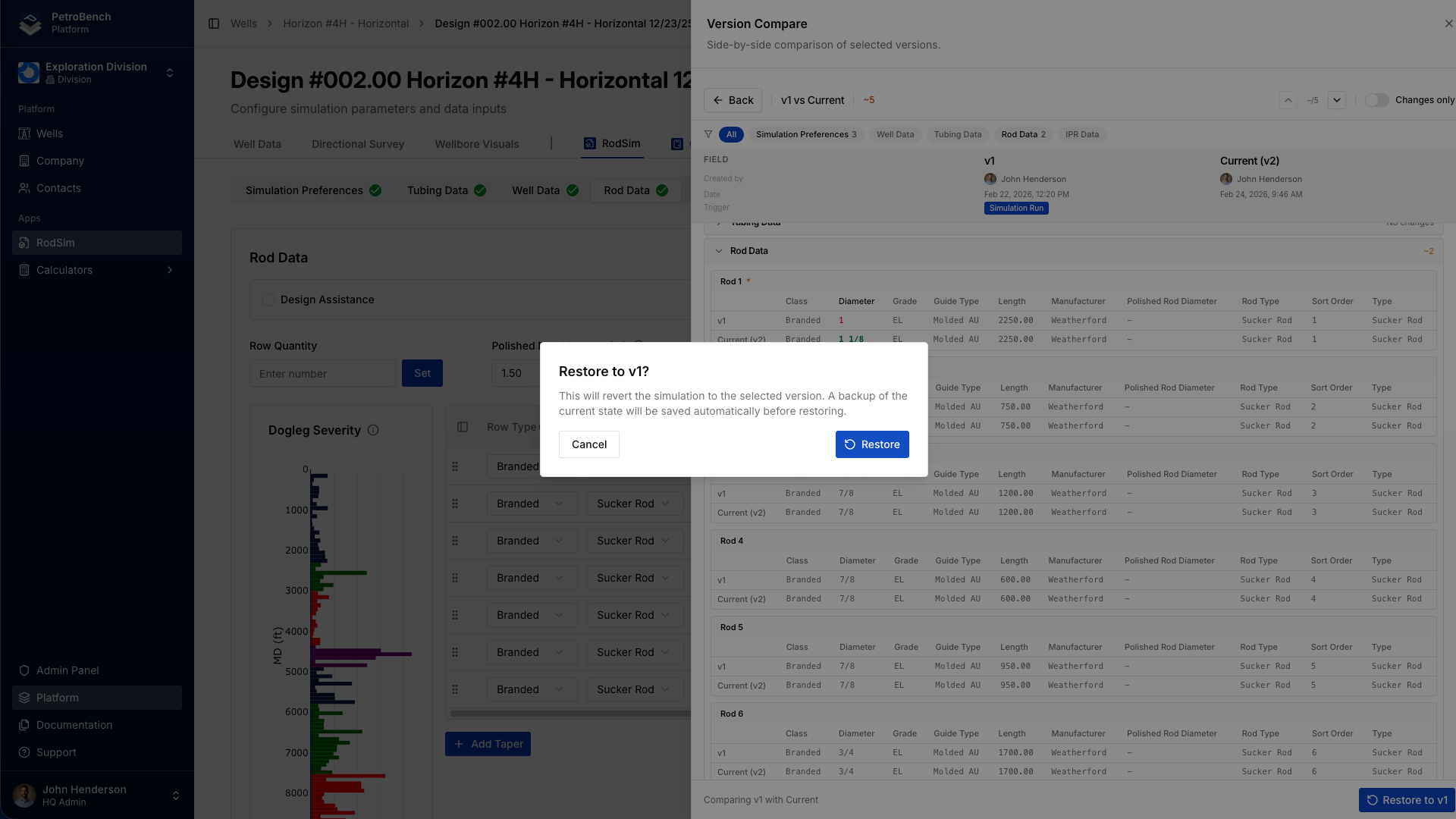
When you need to go back, restore brings a previous version forward as a new version. Restoring version 3 when you are on version 7 creates version 8. The full timeline stays intact - nothing is overwritten.
Every change recorded. Every decision traceable. Every previous state recoverable. That is the difference between an engineering process that depends on individual memory and one that builds institutional knowledge over time.